Plays here from YouTube when you press play. Open on YouTube
Published . Prices, rates and counts in this video were current on that date. This month's numbers are on Market Data. Terence Richardson joined Compass in September 2025, after this video was published.
What is this video about?
“This Insurance Crisis Threatens Home Buying & Selling” is a 20-minute video by Terence Richardson, a Realtor with Compass in Metro Atlanta. It was published on September 10, 2025 on his YouTube channel, Terence Richardson - Atlanta Real Estate.
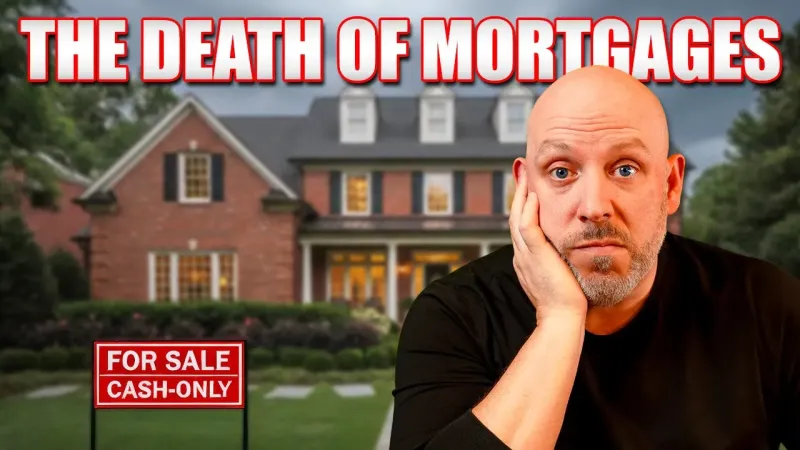
The home insurance crisis is here. Insurers are backing out of states, canceling policies, and leaving homeowners stranded. Find out why it's happening, what it means for the future of mortgages, and what you can do to protect your biggest asset.
Transcript
This is the caption file published with the video, set into paragraphs. Place names the captions misspelled were corrected. Nothing else was added or reworded. Captions can still mishear a word or a number, so check a figure against the video before you rely on it. Captions read November 16, 2026.
The Home Insurance Crisis 0:00
wildfires, hurricanes, tornadoes, floods, major disasters. They're hitting harder and more often than ever before. We've seen neighborhoods that have been flooded. But just when you thought you needed them the most, insurance companies are walking away. They're pulling out of entire states, cancelling policies, and leaving homeowners stranded. And if you're in the market to buy a home, you definitely need to hear this because the safety net you're counting on is disappearing faster than you think.
So much so that if things don't change in some parts of the country, it might become impossible to buy a house unless you're paying cash. Disasters are bigger and more frequent than ever before. If it feels to you like there are more weather related natural disasters, that's not just a feeling. According to the UN's World Meteorological Organization, the number of such disasters have increased five-fold over the past four decades. And here's a stat for you.
In 1960, there were 39 natural disasters reported. Fast forward to 2023 and that number rose to 399 over a 60-year period.
Are Insurers Really Going Broke? 1:11
That's a t-fold increase in the number of natural disasters. So that number of course is worldwide. If we zoom in and come closer to home in the United States, for example, in 2023, there were 28 extreme weather events that caused at least a billion dollars of damage or more. The record 28, the previous record 22 in 2020. So, seems like it's trending in the wrong direction. Over the past two decades, the number of billion dollar disasters increased by 154% and their costs increased by 257%.
Since 1980, there have been 395 of these billion dollar disasters. Well, 201 of them were severe storms. 63 were tropical cyclones, 44 were floods, another 31 were droughts, 24 of them were winter storms. You had 23 wildfires and nine severe freezes. Look, I'm no climate expert, nor am I here to debate whether or not climate change is real or what your beliefs are. People believe what they want to believe. And whether you're in the climate change camp or you believe that something far more nefarious is at play, nobody can deny that these disasters are happening far more frequently and they're stronger and more destructive than ever before.
But that's why we pay our premiums, right? So that when disaster strikes, we're counting on insurance companies to step up and to help not just rebuild our homes, but to help us rebuild our lives. At least that's how it's worked for decades. Except now insurance companies are claiming to be going broke. They're pulling out of entire states. They're cancelling policies by the thousands. The nation's largest homeowners insurance company, State Farm, has decided they won't accept new applications for property in California.
The household names like State Farm, All State, pulling out of these markets. They know the risk is just too high. But is that really the truth? Are they really going broke? Before the wildfires, insurers dropped coverage for thousands of Los Angeles homeowners. The numbers show dropped policies is a growing trend for private insurers with rising non-renewal rates in place prone to climate disasters. Yeah, I just love it. It couldn't be more perfect for us.
But All State, who insured Darlene's house for 18 years, recently sent her a non-renewal notice. You can't just say after 18 years of being okay, all of us today you're not okay and that's it. Home insurance companies are saying homes like our leans are too risky to ensure.
The Record Profits of Insurance Companies 3:46
Now, this next part will shock you. Quite frankly, it should really make you angry. It did me because these companies, they're not struggling. They're celebrating. And they're celebrating on the backs of families who after disasters are often left without homes. As these insurance companies make not just a little bit of money, they're making record-breaking profits. and I'm about to show you just how bad it is. All right, so check this out.
In searching for the most up-to-date data, I found this report. Now, this report shows the first 9 months of 2024, and it compares it to previous years. So, we're going to look at net income. Net income is the bottom line. Everything's paid been paid out, right? So, if they have claims, operating expenses, losses, all that kind of stuff, that's been paid out. So, the property and casualty industry, which is your homeowners insurance, the industry reported net income of $130 billion.
That broke records. The year before in 2023 was 64 billion. In 2022, it was 30 billion. That's right. In two short years, they quadrupled their net income. Tell me again how these insurance companies, these poor insurance companies are struggling and they don't have the ability to pay out these claims because I'm not seeing it and I'm not buying it. How do you know this whole thing isn't just one big scam?
Is It a Scam? 5:11
This isn't just happening in Los Angeles. Across the country, in New Orleans, in Florida, even in places like Iowa, insurers are dropping policies or refusing to insure people because the risk of really dramatic weather events is increasing. And so you have people all across the country who either don't have insurance or are turning to insurers of last resort because they can't get insurance anywhere else. They're turning their back on those people in the name of profit.
Now I'm an entrepreneurial person. Real estate is I believe in profit. I believe in capitalism. But they're more profitable than ever breaking records. And yet they're pulling out of states claiming that they're going broke. Now, insurers are saying climate change, inflation, and the regulatory environment have created a situation where it's difficult to operate a profitable business in some locations across the country. Private insurance companies are withdrawing insurance in high-risisk areas due to climate risk and people are seeing their premiums increase in the public market.
But look, I get it. I know that places like California, Louisiana, Florida with their wildfires, floods, and hurricanes are becoming much more expensive to rebuild when these catastrophes happen. I get it. Construction costs have gone way up. I see it in real estate. Cost of construction is huge. But that's why insurance exists. You pay into insurance even though you don't need insurance today. And you might never file a claim ever, but you're still paying into it on the off chance that if something does happen that it's going to be there for you.
It's it's the their whole reason to exist. So blaming disasters in light of record profits is hypocrisy at its finest.
This Map Will Shock You 6:54
Take a look at this map. It shows the rate of cancellations by counties throughout the US. The darker spots are obviously where the higher rate of cancellations are. These are thousands and hundreds of thousands of cancellations. Look at the dark spots in California. First, people lost their insurance and then they lost their homes. Now, if these insurance companies continue to pull out of these high-risk areas, I mean, we So, California, Florida, Louisiana, who knows where in the future, we might reach a time where the only way that you can buy a house in a given area is if you're able to pay cash for it.
The "No Mortgages" Trap 7:29
Why do I say that? Well, if you're not aware, in order if you're going to get a mortgage on a house, you have to have homeowners insurance. It's the only way that you're going to get a mortgage because something does happen, the bank wants to be repaid what's left on that loan, and they'd get repaid first. So, if there's no insurance, there are no mortgages. And if there are no mortgages and it's only available to cash buyers, that's a much smaller segment of the market.
You get rid of about 2/3 to 3/4 of all the buyers. What is that going to do do to home values in that given area? How would I even sell my house if I can't get insurance? Cuz how's the next person going to, you know, they're not going to want, you know, they can't buy a house if they can't get insurance. Well, I guess unless they're coming in cash.
The Hidden Problem of Rising Premiums 8:16
But that's not the only problem we're facing. If you own your current home, have you noticed that your home insurance premiums are going up every year? Losses are increasing related to climate risk. As that risk increases, so does the cost of insuring those assets that people have on hand. Now, it's not just disasters that are pushing up these prices. It's also the rising costs of construction that have exploded since the pandemic.
Now, take a look at this map. This is pretty interesting. It shows a three-year period between 2020 and 2023 and the percentage change in premiums. So, let's look at my area. I live in the Atlanta metro area. If you take a look at Fulton County in those three years, home premiums went up by 32%. That's a lot, right? Cobb County went up by 42% and Gwinnett County by 57%. So, it's interesting to see.
And that's just in my neck of the woods. I don't think the people who live in Prescidio County, Texas, are very happy that their premiums went up 188%. You know who probably isn't very thrilled either? Residents of a county in Michigan. And if you take a look at Mason County, those premiums went up by $264%. So premiums started at $1,300 a year and by the end of this increase, they were at 47.
And that's based on 2023 numbers. Who knows where they are today. They're probably even higher. Now, the increases in premiums were throughout the entire United States. These are just some examples I found while clicking around.
Future Projections: How High Will Premiums Go? 9:46
But what I'm going to show you next is even more eye opening. Now, I found some interesting research with some pretty eye-opening projections. So, did you know that Orleans Parish, Louisiana, that's New Orleans. Well, homeowners premiums in Orleans Parish over the next 30 years, so in 2055 are scheduled, not scheduled, but projected to go up 634%. Well, the average policy today is roughly $3,800. That means that 30 years from now, if it goes up that 634%, you'll be looking at roughly $24,000 a year.
Not in mortgage payments, $24,000 a year just in homeowners insurance. That's $2,000 a month. Now, that news gets even bleeer if you happen to live in Miami. So, if you're in the Miami Dade County area, insurance right now is silly expensive. The average policy apparently is $12,000 a year, which makes sense. You get hit by hurricanes all the time. So $1,000 a month. Well, it's scheduled again with that word. I kind of think that this is all built in to a certain extent, but hey, projected is a better way of putting it to go up by 590%.
The math on that 12,000 a year now increased over 30 years of 590%. That's basically another 6x and you're looking at $71,000 a year not on mortgage payments but on homeowners insurance. How does that make you feel? I don't feel very good. Drop a comment. Do you think that's even possible? I know that inflation over these last couple years has made everything ridiculously more expensive and 30 years in the future is a long time.
So maybe these projections aren't as crazy as they seem with the way things are going. like what's going to happen to the value of our dollar, right? Things to think about. Drop a comment.
What Are Lawmakers Doing? 11:47
Curious to read what your thoughts are. So, what if anything are lawmakers doing to try and fix this mess? Did people get what they needed to get back into a home? No. Is there a grand strategy, national resilience strategy that says this is how we're going to deal with these big disasters when they happen? No. It's not there. And the sad truth is there's really not much happening. They tried in California when State Farm went to the commission, the insurance commission, and asked to increase rates.
They said, "No, you can't increase rates. We've got to cap it. We need a moratorum. People can't afford the current rates." State farms reaction, "All right, we're going to pull out then." And that's what caused them to pull out of California. They couldn't get the rates they wanted. All right, they just left. But the truth is, and I truly mean this, like nobody is coming to save you. So you could potentially wait for some type of legislation to happen in the future.
That could take forever. But waiting for politicians to agree on anything is an exercise in frustration and potential futility. Like that's just not going to happen.
How to Protect Yourself Now (for Buyers) 12:54
So what can you do now to protect yourself when it comes to insurance? So first and foremost, if you're in the market to buy a house, the very first thing you should be doing is looking at your own situation. Here's what I mean by that. If you owned a house in the recent past, maybe you still own a house now, you're going to be selling that house and buying another one. If you had a major claim anytime over the last 5 years, you need to know about that and you need to check to see if it's going to be a problem when you buy your next house because it could absolutely preclude you from getting insurance not just from the same insurance company that's insuring you now, but from other carriers as well.
This scenario literally just happened to clients of mine. I helped this couple buy a house in the Atlanta market in 2022. Beautiful house. It had some age on the roof, but the roof had quite a bit of useful life left in it. We had it inspected, but a storm came through. Hail damage, wind, all that kind of stuff. Water started pouring into the attic. They called All State, their insurance company. an adjuster came over, looked at the situation, and said, "Yeah, there's no salvaging this roof.
It's not repairable. You need a brand new roof." Clients paid the deductible, got a brand new roof, went on, enjoyed their lives for the next 3 years. Fast forward to today, and they wanted to rightsize their home, something that' be a little bit more appropriate for their growing family. and when they went to buy the next house, they found out. Luckily, during the due diligence period that All State wouldn't insure them, they also checked with seven different other carriers who all said, "No way."
And at first, we thought it was the house they were buying because it was a house that was over 50 years old and we thought that it had been flagged, but no, it was them. And ultimately, that major claim sticks to your record for 5 years and they still have a couple years to go. Luckily, they were able to find insurance, but it's coming at a higher cost, and it's not as good of an insurance policy as you would get from some of the major carriers.
But not everyone's in that position to be able to afford that difference. So, here's my first piece of advice. Double check your own situation. Make sure that if you do have a claim that you can be insured on the next house. And if your current insurance companies aren't going to do it, be prepared to understand what the difference in cost is because you might have to pay more temporarily on a premium until whatever event falls off of your record and then you'll be able to reshop your insurance after that fact.
So that brings me to my second point. You need a real estate agent who understands what's happening with this insurance crisis. Cuz the truth is not everybody knows. And if you don't know to check that stuff during due diligence because I'll tell you a lot of people will check insurance the week before closing. They finalize it, get that declaration to their lender, but by then they don't have any contingencies left. You know, it's one thing to be able to cancel on a house because you find something big during the home inspection, but after that inspection period is over, what happens?
Now, the third point for buyers, sometimes it has nothing to do with you. Sometimes it's the house you're buying. So definitely be proactive about finding out whether the house you're interested in is insurable because in some cases moving forward might not be.
How to Protect Yourself Now (for Homeowners) 16:16
Now if you're a homeowner, I've got not one but two suggestions for you, two recommendations. So the first one is if you've lived in your house for a couple years, I'd recommend you proactively reach out to your insurance carrier to discuss your policy. Double check and make sure that you're not underinsured because what's happened over the last couple years? Home values have shot up. Has your policy kept up with replacement coverage?
Right? Construction costs have gone up. If you haven't been on top of your policy, there's a good chance that you might be underinsured. And should disaster strike, you might not get all of the money you need to be able to properly rebuild. What' you get? Like $90,000. Can you build your home again for $90,000? Not even close. That could be worst case because lender gets paid first and if you're not given enough because you didn't keep up with it, you won't have enough money without coming out of pocket either with extra cash or getting some other type of loan to rebuild the house that you had.
My second tip has to do with people who've lived in their homes for a long time. If you've had your policy with the same carrier for a long time, I highly recommend that you shop that thing around. My in-laws, for instance, military family, they love USAA. Most military families do. But over a very long period of time, USAA's premiums just went up and up and up. And so they finally shopped their rates around.
I think about two years ago, and they were able to save half. Like they saved half of what their premiums are by switching with same or better coverage. That's not to say that USA is not a good company. It's just that these companies, their rates go up and down based on what's happening to them. So, I recommend that you check that, maybe have that conversation before renewal time to see what other options and costs there are out there for you.
How to Protect Yourself Now (for Sellers) 18:04
Now, if you're thinking about selling your home and you're in one of these high-risk areas, I don't know that this is necessarily the case right now, unless you happen to be in California or some parts of Florida, but if you're living in an area where it's becoming harder and harder for people to get insurance, just expect that there might come a day where you might have to offer some pretty interesting incentives to overcome the fact that insurance options are limited.
I mean, just remember as premiums go up and or coverage disappear, your pool of buyers is also going to shrink. And I hate to say it, but if that's a concern to you, maybe moving to an area that has less risk before values change down the road could be an interesting play.
The Bottom Line: Your Property Value is at Risk 18:46
The moment that an individual gets a non-renewal letter from the private insurance market, they essentially lose 12% of their property value. It's not just California. Louisiana and Florida are contending with similar issues due to flood risk. But honestly, I hope it doesn't come to that. I hope that these high-risk areas that something gets figured out because honestly, these companies can afford it. They're making record profit. But this crisis, it's not going away anytime soon.
And honestly, buying a house is one of the biggest financial investments most people will make. And this insurance trap right now is one that could cost buyers literally thousands that they could be walking into blindly. So, if you're in the market to buy and you want to avoid making costly mistakes, then I highly recommend that you watch this video next because what I'm going to reveal could save you thousands of dollars.

About Terence Richardson
Terence Richardson is a Realtor with Compass and the founder of the Terence Richardson Group, which serves Metro Atlanta. He publishes Atlanta’s Housing Market Update every month on YouTube and in The Richardson Report.