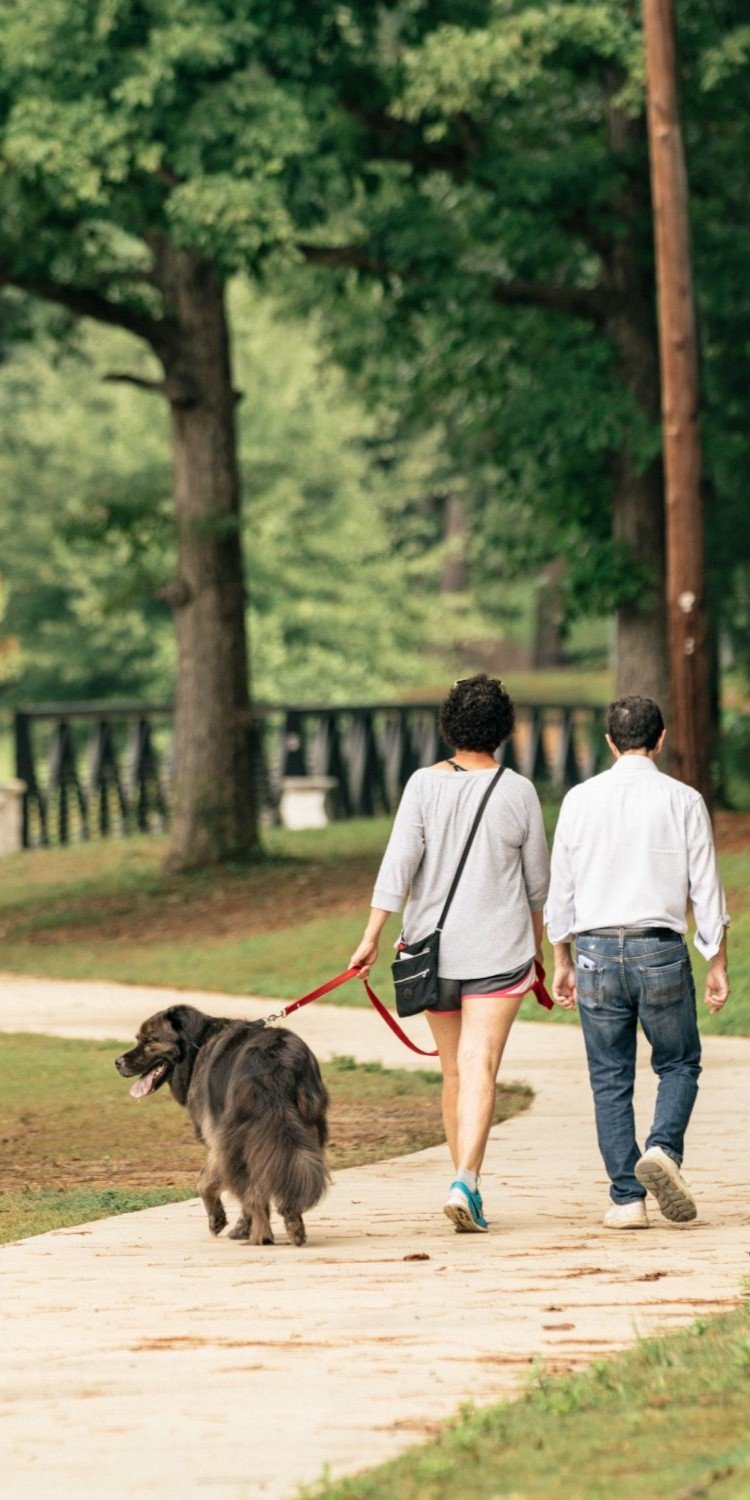
On a Saturday morning at Birmingham Park, you will pass three kinds of people doing the same thing at different speeds: a trail runner cutting through the Yellow Trail's shade, a family walking a leashed dog past the meadow, and a rider on horseback moving along one of the natural-surface loops that wind through the park's roughly 200 acres in northwest Milton. All three share the same nine trails. All three have been sharing a park whose infrastructure has quietly been falling behind its popularity.
That is about to change, and the headline the city led with when the news broke this spring was a bathroom. The Georgia Department of Natural Resources selected Milton's Birmingham Park proposal as one of 17 projects statewide for a Recreational Trails Program grant, and at $200,000 it is tied for the largest award in this funding cycle, out of more than $3.1 million the state is distributing to expand outdoor access across Georgia. A new restroom and ADA-compliant trailhead parking are the most visible line items. The grant also supports several other park improvements, outlined below.
What the Grant Covers
The grant covers a restroom building, ADA-compliant parking at the trailhead, repair of a wooden bridge, new signage along the walking and equestrian trails, and the rerouting of two sections of the Yellow Trail for visitor safety. Milton is covering roughly half the total cost itself, using money the city sets aside every year specifically for Birmingham Park upgrades, which tells you this isn't a one-time windfall. It is a standing budget line that finally has state money to match it.
The city's own project page frames it plainly: the state announced Milton's selection in spring 2026, and the $200,000 pays for about half the anticipated cost, with the rest coming from that annual upkeep fund. Once the money is formally available, the city has up to two years to spend it, so anyone picturing a ribbon-cutting by Thanksgiving should adjust expectations. This is a multi-season project, not a weekend one.
Work Completed Before the Grant
Before any of this state funding was confirmed, Milton parks crews replaced a failing culvert on the Blue Trail after staff determined it was creating a real injury risk for horses. That work came first, ahead of the restroom, ahead of the parking lot, because the alternative was a trail that could hurt the animals using it.
That ordering matters. A restroom is the kind of improvement every visitor notices and every press release can headline. A culvert replacement is the kind of improvement almost nobody notices unless they ride horses on that specific stretch of trail. In its report on the project, Appen Media quoted Milton's Parks and Recreation Director, Tom McKlveen, putting the broader project in terms anyone can appreciate:
"Birmingham Park's natural beauty and charm are unmatched, and this project should only once enhance people's enjoyment of it."
But the sentence underneath that quote, in the same city release, is the operational one: the plan also includes stream restoration and better horse-trailer access, not just cosmetic upgrades.
Where the Next Dollar Goes: The Green Trail and Little River
The next priority after the restroom and the Yellow Trail work is habitat restoration along the Green Trail, which runs adjacent to Little River. City parks staff have told Milton's Equestrian Committee that repeated horse traffic along that stretch is wearing down the streambank, and the plan is to let the shoreline vegetation recover while routing riders around the most sensitive sections.
That is not a detail you would find in a generic roundup of "new trail signage" or "restroom construction." It is the difference between a park that gets a coat of paint and a park whose managers are actively trying to keep a specific creek from eroding under the weight of the community that loves using it.
Two Different Trail Stories, Often Confused
If you have followed any Milton city news lately, you have probably also heard about the Milton Trails Blueprint, the city's plan for sidewalks and multi-use paths connecting schools, neighborhoods, and eventually the Big Creek Greenway. It is easy to lump that in with the Birmingham Park news, since both involve the word "trail" and both involve city money. They are not the same project.
| Birmingham Park Project | Milton Trails Blueprint | |
|---|---|---|
| What it covers | Natural-surface hiking and equestrian trails inside one 200-acre park | Sidewalks and multi-use paths across the whole city |
| Funded by | Georgia DNR Recreational Trails Program grant plus city upkeep funds | City budget and TSPLOST sidewalk funding |
| What's changing now | Restroom, ADA parking, bridge repair, trail signage, and Yellow Trail reroute; Green Trail restoration is a later priority | An updated planning map, not yet tied to specific construction dates |
The city has said as much directly: the Blueprint deals with paths in city right-of-way, while a nature trail like the one at Birmingham Park is a separate category entirely. If you are trying to figure out when your street might get a new sidewalk, the Blueprint is the document to watch. If you are trying to figure out when the Yellow Trail reroute will be finished, that is the Birmingham Park project, and it runs on a different clock.
What This Actually Means for Your Next Visit
Nothing about your Saturday morning changes immediately. The trails are open now, the way they have been. What is different is the timeline underneath the surface. Expect intermittent, localized closures as crews work through the bridge repair and the Yellow Trail reroute, most likely affecting short stretches rather than the whole park at once, based on how the city handled the earlier culvert replacement on the Blue Trail. The restroom and ADA parking will take longer, since they involve utility connections and permitting on top of construction.
If you are one of the regulars, the practical advice hasn't changed much: this remains a shared-use park where hikers, trail runners, and horses all use the same nine natural-surface trails, so leashed dogs and a willingness to yield to horses are still the basic courtesy that keeps the place working for everyone. The park's own facility listing still describes it the way regulars already know it: a place to escape into nature that draws hikers and equestrians alike. That description is about to get a little more accurate, one culvert and one creek bank at a time.
What is worth remembering, the next time you see a headline about a new park restroom, is to ask what got fixed first and why. In Milton's case, the answer was a horse trail, which tells you more about how this city actually takes care of its parks than any ribbon-cutting will.
Birmingham Park is one of the reasons people plant roots in Milton and don't leave, and small details like this, a culvert fixed before a bathroom, a creek bank protected before a parking lot gets paved, are part of what makes the difference between a subdivision and a community. If you're curious what that kind of neighborhood commitment does for your home's value, or you're weighing a move to a place where the city fixes the horse trail first, Terence Richardson is glad to talk through it. Schedule your free market consultation whenever you're ready.