Plays here from YouTube when you press play. Open on YouTube
Published . Prices, rates and counts in this video were current on that date. This month's numbers are on Market Data.
What is this video about?
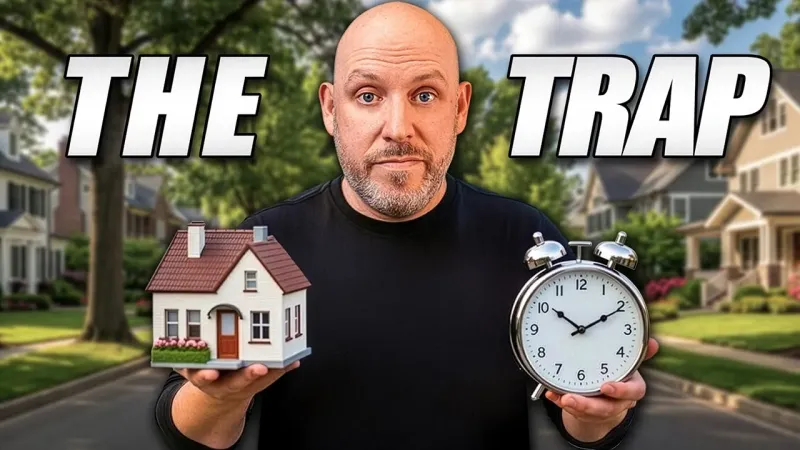
“Should You Buy a House in Georgia in 2026?” is a 13-minute video by Terence Richardson, a Realtor with Compass in Metro Atlanta. It was published on January 29, 2026 on his YouTube channel, Terence Richardson - Atlanta Real Estate.
Are you waiting to buy a home in Georgia because you don't want to make the wrong decision? Many people are on the fence for the exact same reason. In this video, I provide a framework to help you decide if you should buy a house in Georgia in 2026 or if you should wait, based on your own circumstances.
Transcript
This comes from YouTube’s automatic captions, set into paragraphs. One figure the captions misheard was corrected after checking it against the video’s script or a second transcription. Nothing else was added or reworded. Captions can still mishear a word or a number, so check a figure against the video before you rely on it. Captions read November 16, 2026.
The dilemma of buying 0:00
You're scared to buy a home because you don't want to make the wrong decision. But staying put might already be the wrong one. And I get it. You don't want to buy too early. You don't want to regret the timing, the payment, or the house itself. But while you're waiting to time the market, your life keeps moving. Your commute gets worse. Your space gets smaller, and your stress goes up. So, should you buy a house in Georgia in 2026?
Maybe, maybe not. The real question is whether or not waiting is helping you or quietly making things harder. By the end of this video, I'm going to give you a very clear way to answer that for your own situation. But first, we need to talk about why this decision feels so difficult. Most people are on the fence right now for a pretty obvious reason, right? Home prices still feel really high. Interest rates, well, they don't feel friendly.
And even though the economy, the headlines say that the economy is improving, everyday life feels more expensive than ever. Groceries costs more, insurance costs more, child care costs more, just existing feels heavier. So even when things look stable on paper, they don't feel stable in real life. And when life feels more expensive, people freeze. That matters because this isn't just a housing problem, it's a decision problem. Waiting feels safer even when it costs you in other ways.
Common reasons for waiting 1:23
Hold on to that thought. Almost everyone I speak to who's on the fence right now, well, they're waiting for the same four reasons. One, they're waiting for prices to come down. Two, they're waiting for interest rates to come down. Three, they want monthly payments to feel reasonable again. And four, they're they just want the economy to feel safer. Now, on paper, that sounds perfectly reasonable. The problem is that rarely do these four things ever align at the exact same time.
Perfect timing is usually only obvious after the fact. And while people are waiting for all four boxes to get checked, nothing about their actual life is improving.
Atlanta market reality 2:00
Now, let's ground this in reality, specifically by taking a look at metro Atlanta. Now, if you're a regular viewer and you watch my monthly Atlanta housing market videos, you'll know that right now we're not in a crash market. We're also not in a frenzy from a couple years ago. We're in something new. What we're seeing is normalization. There's more inventory, meaning there are more homes for sale. So buyers have more breathing room.
It's taking longer to sell properties. Properties are selling for a discount. They're not going for over asking like they did just a couple years ago. No, what we're seeing is negotiation is back on the table. This is not 2021. It's also not 2008. And that middle ground feels uncomfortable because it doesn't give you a clear signal. And when there's no clear signal, people default to waiting.
The impact of interest rates 2:50
Now, before we decide whether waiting is the right play, let's slow down a little bit and take a look at the math. Now, we're going to talk affordability. And I think that this year you're going to hear affordability, home affordability specifically, as a buzzword. It's going to be in the headlines and the media everywhere. Politicians from both sides of the aisles are going to make it a priority. Why? Because we're entering midterm season and their constituents on either side, everyone, all Americans have one thing on their mind really.
And it's the one thing that unites us and it's being able to afford the roof over our heads, right? Whether it's renting or owning, home ownership for everybody has become more expensive. So, everyone's going to talk about how to solve that as we move into 2026 and beyond. So, you're going to hear it everywhere. But ultimately, affordability is about monthly payments. It's not just about the headlines. And a 1% drop in the interest rate matters more than people realize.
But it's hard to conceptualize when you see 7% versus six, which is what it was this time. Last year, the average 30-year rate was 7.07%. This year, 6.08% just 12 months later, right? So, what does that actually mean? What does 1% actually do? Let's take a quick look at that. We're going to use a $600,000 house somewhere in Atlanta. We're going to do a 10% down payment because that's very close to what the average down payment is in Georgia, and we're going to look at 7%.
We're not going to look at taxes or insurance. uh we're simply going to look at principal and interest and we're going to look at how that payment changes when you go from 7% down to 6%. So at 7% the payment is 3592 rounds up to 3593 per month and when interest rates go down 1% that payment changes from 3593 down to 3237 rounded up to 3238. So, it's approximately $355 less per month with just a 1% drop in the interest rate over the course of the year.
That's a savings of $4,200. Now, remember, this is not a prediction video about where interest rates are going, right? We all want them to come down, but we're taking a look at the math. And it's important to remember that headlines, they don't pay your mortgage. Your monthly payment does.
Lifestyle costs of waiting 5:15
But here's where most people stop. And if you're stopping here, you're missing out on the most important part of whether or not buying in 2026 makes sense. Even if the math improves, it's not going to magically fix real life. A lower payment's not going to give you more space. It's not going to shorten your commute. It's not going to give you a quiet place to work when you've got, I don't know if you can hear them, two little toddlers outside that are just running around having fun, but you need a quiet place to work for work, right?
You don't magically get that with the lower payments. It does not reduce daily stress. And while you can win at the math, you can still lose with the lifestyle. And this is exactly why two very different people can look at the same market and make two very different decisions. To understand this, we need to look at the life math.
Evaluating the risk of delay 6:00
Now, here's the part no one's going to tell you about waiting. Waiting is not free. It always costs something. Maybe you're paying it in rent. Maybe you're paying it in a longer commute. Maybe you're paying it in stress or in storage units or constantly having to rearrange your life around a house that no longer fits. Now, you might not see the bill every single month, but the cost is real. Now, for the parents out there with young kids, you know as well as I do that kids grow up fast.
And what seems manageable today changes. We experience that. We bought a house that was big enough for two people and a cat when we didn't think that my wife could have kids after cancer. Now, we've got two kids. They're out there playing right now. They're two. They're both two. One's going to turn three next week. They're 11 and a half months apart. We outgrew the size of our house. Now we're in a new place, right?
So, we needed more space. But when we bought the house, we thought that that would be a house that we could stay in for a very long time. So, circumstances change. Life doesn't wait on you. For those of you who commute to work, commute time isn't just minutes. It's energy. And it's time that you never get back. Sure, you can listen to a podcast in the car as you brave Atlanta traffic, but there's something to be said about quality of life when you don't have to necessarily sit in your car for an hour each way twice a day.
Over the past couple years, being able to work from home and change what people needed in a house. Now, with more companies pushing people back into the office, commute time is once again a top consideration, and it's one that quite frankly is catching a lot of people offguard. Waiting to buy can be both financially cautious and emotionally expensive both at the same time. And this is where a lot of people are coming to the realization of an uncomfortable truth.
The risk is not just buying too early. The risk is staying stuck too long. But that doesn't mean everyone should buy.
When buying makes sense 7:49
Let's get specific. At this point, most people fall into one of two buckets. Either you're renting wondering if you've fallen behind or two, you currently own your home, but you've outgrown it and you're stuck because you've got a interest rate that you feel is too good to give up. Different situations, same pressure, and both groups make the same mistake when fear runs the decision. Now, buying can make sense in 2026 if a few things are true.
The payment is comfortable today without betting on refinancing. two, you still have an emergency fund after closing. Three, your income is stable. And four, your current space or commute time are actively hurting your quality of life. Look, if buying doesn't immediately remove a source of stress in your life, it's probably the wrong move. More space, less driving, fewer daily compromises. If the only upside is ownership itself, that's not enough. But even when buying makes sense, there still is another trap.
Most regret doesn't come from buying. It comes from only solving today's problem. Moving again in 3 or 4 years is expensive. Moving in transaction expenses reset your equity progress. Future proofing does not mean a forever home. It means space that can flex. A layout that adapts one extra bedroom instead of one too few. How about a bonus room that can change roles? A school path or commute that still works years from now?
The goal is not perfection. The goal is to stay put long enough for equity to actually work. Buying the wrong house in 2026 can be worse than not buying at all. Which brings us to when buying is a bad idea.
When waiting is the move 9:35
Buying doesn't make sense if your income is unstable. If you're stretching to qualify, if your reserves are too thin, if you're planning on moving again in just a couple of years, or if your fear of missing out is what's actually driving the decision. Waiting can be smart when it's intentional. But waiting becomes a problem when nothing changes and nothing improves. So, how do you actually decide which bucket you're in?
The decision framework 10:03
And this is where most people get stuck. Up to this point, everything we've talked about is true, but it might not necessarily be enough to make a decision. Knowing the math doesn't tell you what to do, and knowing what the lifestyle trade-offs are don't tell you what to do either. That's how so many smart people can find themselves getting stuck. They have information, but no way to turn it into a decision.
And that's exactly when they need a framework, not another opinion. So, I built one specifically for this moment. Not another calculator, not a hottake, not a checklist, a decision framework. It forces you to weigh the math and the life side of buying at the same time. And separating the two is how people mess this up. Most tools ask how much house can you afford? And while I have that calculator also on my calculators.
website, that's not the right question for deciding whether or not you should buy in 2026. No. The framework asks, "Is your current housing situation actively costing you time, energy, or sanity? Does buying reduce the pressure, or does it just change the flavor of stress? If you buy, will this house still work in two, five, or even 10 years from now?" It looks at five constraints. space and functionality pressure, time and commute cost, payment comfort and financial buffer, life staging timing, and regret risk.
And then it gives you one of three outcomes. Buy, wait, with intention, or three, stay put and optimize. Not because one's better in general, but because one creates the least regret for your situation. You can ignore the results if you want, but if you do, most people end up making the same mistake they were trying to avoid. And no, this framework does not tell everyone to buy. For a lot of people, the right answer is to wait.
For some people, the correct answer is to stay exactly where they are and to stop obsessing over the market. That's why it works. It's not trying to sell you a house, trying to save you from a bad decision. It takes about five minutes and it'll do more for your clarity than hours of scrolling headlines and listening to hot takes ever. Now, the decision framework tool is absolutely free. There's no sign up or exchange of information required ever.
It lives on my calculators. website. Link to that in the description and in that first comment. Hopefully, it can help guide you and help you make a better decision about whether or not it's worth buying or waiting in 2026. The biggest risk right now is not about buying too early. It's about allowing fear to disguise itself as patience while nothing about your life actually improves. Look, you don't need perfect timing. You need a decision you can live with for 5 years.
And if buying this year is on the table, the fastest way you can ruin a good decision is by overstretching and regretting your payments. So to make sure that doesn't happen, I highly recommend you watch this video here. It's going to teach you exactly how to discover how much house you can comfortably afford here in Atlanta based on how much money you

About Terence Richardson
Terence Richardson is a Realtor with Compass and the founder of the Terence Richardson Group, which serves Metro Atlanta. He publishes Atlanta’s Housing Market Update every month on YouTube and in The Richardson Report.